
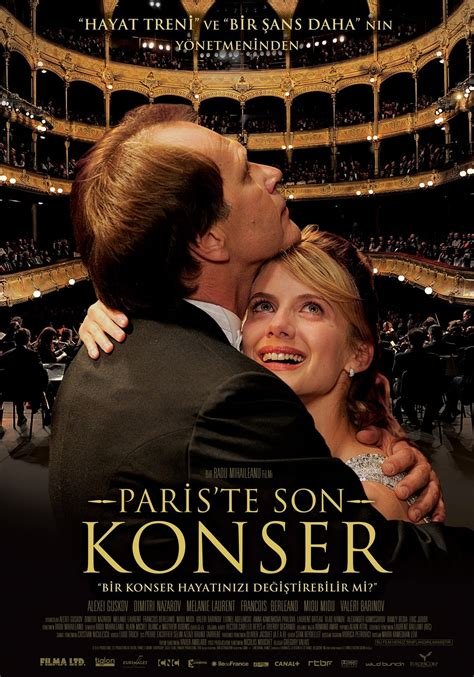
Le Concert
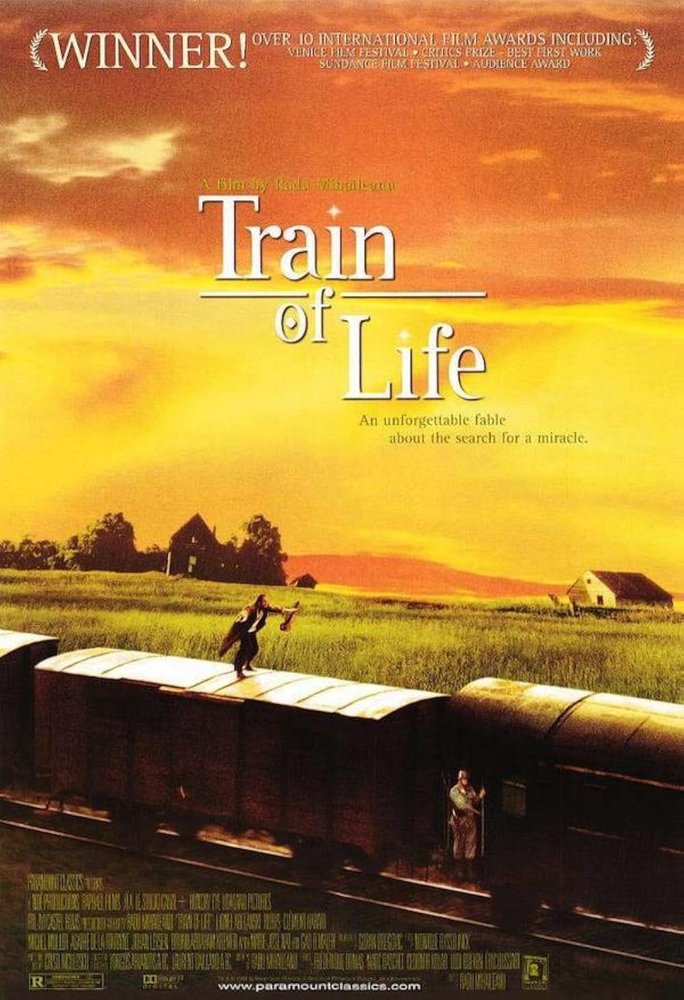
Radu Mihăileanu directed Le Concert (Paris'te Son Konser in Turkish), a comedy-drama from 2009. Tchaikovsky's Violin Concerto in D major plays over the final scene. Released in France on 4 November 2009, it was warmly received by critics and audiences. It follows the director's earlier light dramas Yaşam Treni and Bir Şans Daha.
The story centres on Andrei Filipov, once the master conductor of the Bolshoi Orchestra, dismissed in the Soviet era for refusing to drop his Jewish musicians. Thirty years later he finds a chance to bring the old orchestra together. The plan is simple: travel from Moscow to Paris for a single concert and pass themselves off as the Bolshoi Philharmonic. But Filipov has a personal errand in Paris, a meeting with their young solo violinist tied to dark secrets from the past, and the real Bolshoi is on their heels. Aleksei Guskov, Mélanie Laurent and Miou-Miou star, with François Berléand, Lionel Abelanski and Ramzy Bedia.
Filming began on 23 May 2008, mostly in Romania, with some scenes in Paris and Moscow. It won the 2010 Césars for Best Score and Best Sound, the David di Donatello for Best European Film, and was nominated for Best Foreign Film at the 68th Golden Globes.
| Director | Radu Mihaileanu |
|---|---|
| Production company | BiM Distribuzione |
Reactions
You can pick up to 3 reactions.
Cast
Names without a link have no profile here yet.
 François Berléand
Olivier Morne Duplessis
 Lionel Abelanski
Jean-Paul Carrère
 Ramzy Bedia
The boss of Le Trou Normand
Also in the cast: Aleksei Guskov, Mélanie Laurent


Comments