Amok

Amok

Movie · 1983 · 6 people

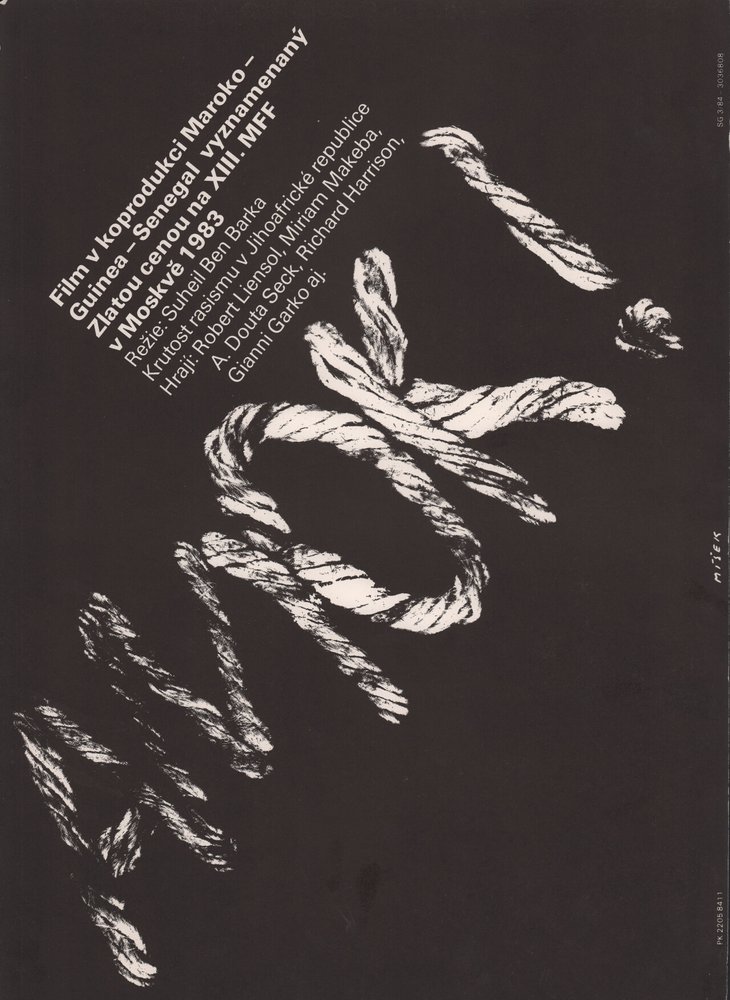
Morocco, Senegal and Guinea joined forces on Amok, a drama that Souheil Ben-Barka directed in 1983; it was made in French and runs 103 minutes. It is counted among Moroccan films and has been shown in Germany as Amok – Aufruhr in Afrika. It won the Golden Prize at the 13th Moscow International Film Festival. It is remembered as the first dramatic film made by that Moroccan-Senegalese-Guinean partnership to take a clear stand against racism.

The screenplay borrows heavily from Alan Paton's Cry, the Beloved Country but moves the action into the context of the Soweto uprising. At its centre is an old teacher who leaves a backward village in Natal for a modern Johannesburg torn by conflict, a journey that serves as an initiation for him. Ben-Barka made the film after witnessing the conduct of South Africa's apartheid authorities on a trip to Madagascar, and he wanted to answer it on screen.

Ben-Barka, Michel Constantin and François Rabaté wrote the screenplay. The cast includes Miriam Makeba, Robert Liensol and Douta Seck, and Richard Harrison, Edmund Purdom, Gianni Garko, George Ardisson and Claudio Gora are also counted among the players.

DirectorSouheil Ben-Barka

Reactions

You can pick up to 3 reactions.

Cast

Names without a link have no profile here yet.

Also in the cast: Robert Liensol

Through different eyes

History & Society Lens Asks about the period, the social background and what the work reflects.

Amok matters as a response to apartheid in Africa's own voice. That Morocco, Senegal and Guinea joined forces on it shows racism being treated as a question for the whole continent, not only for South Africa. Running from a backward village in Natal to Johannesburg, the story also puts at its centre the upheaval of rural-to-urban migration and modernisation; an old teacher's journey invites thoughts about the rift between generations as well. Moving Alan Paton's novel into the Soweto uprising ties a literary inheritance to a concrete historical moment. For anyone wanting to understand the politics of the period, it is a valuable document.

Cinephile Looks at script, editing and directing choices; keeps a distance from formula films.

The film's intent is clear and commands respect: to answer a witnessed injustice with cinema. But a risk common to films born of anger is on the table here too; the message can crowd out the complexity of the characters. The decisive question is how far a screenplay borrowing heavily from Paton's novel builds its own dramatic logic while moving events into another historical setting. Shaping the old teacher's journey as an initiation story is a smart choice; personal transformation gives a political panorama a human axis. The Golden Prize in Moscow shows that the film found an international response in its day.

Family Viewer Asks whether the whole household can watch it; cares about humour and heart.

The subject is racism and an uprising, in a city shaken by conflict. It may be heavy for young children, so it is a good idea for an adult to look first. Watched with high-school-age teens, though, it is a good chance to talk about what apartheid was. Seeing on screen something they read about in history class may stay with them longer.

These are not reader reviews: they are short editorial takes written from different viewer perspectives with AI assistance. Reader reviews are below.

Reviews (0)

Log in Log in to write a review.

Comments