The Misfortunates (De helaasheid der dingen)

The Misfortunates (De helaasheid der dingen)

Movie · 2009 · 15 people

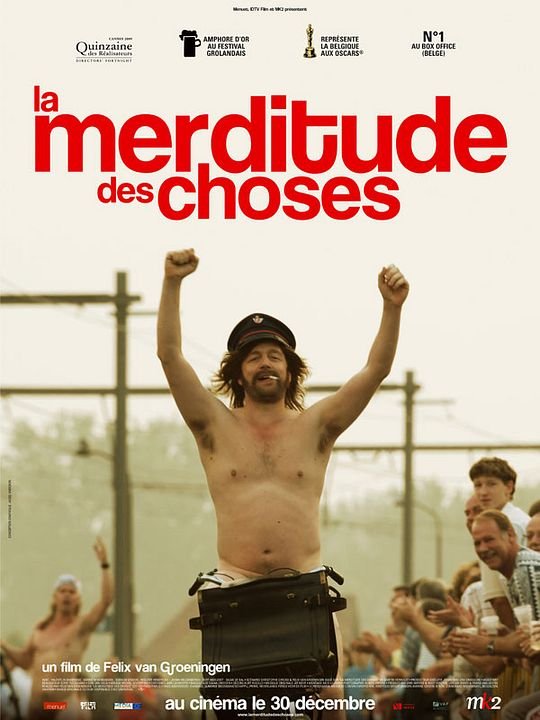
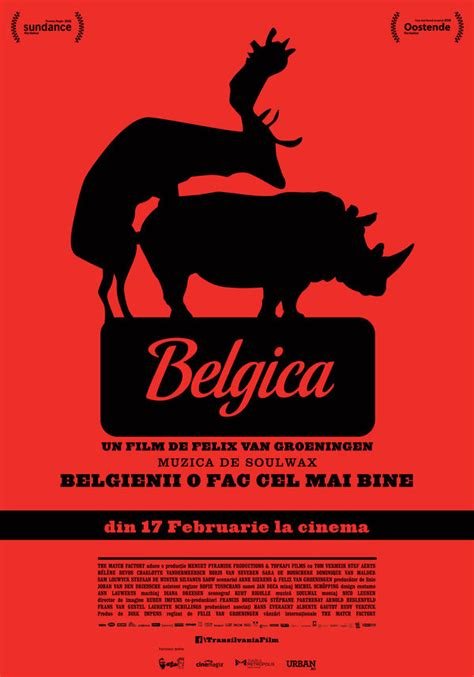
Felix van Groeningen directed The Misfortunates (Dutch: De helaasheid der dingen), a 2009 Belgian-Dutch comedy-drama adapted from Belgian writer Dimitri Verhulst's semi-autobiographical 2006 novel of the same name.

The film follows the painful coming of age of Gunther, a thirteen-year-old boy who grows up in a small town under one roof with his poor father, three uncles and his grandmother. Life in the Strobbe household revolves around drinking, women, impropriety and idleness, and no one expects the boy to turn out any different from the men raising him. The narrative hinges on whether Gunther can escape this seemingly inherited destiny and carve out a future of his own.

Filming began in January 2008. The picture was selected for the Directors' Fortnight at the 2009 Cannes Film Festival, where it received the Prix Art et Essai, and it later took the Best Film prize in the International Competition at the Istanbul Film Festival. It was also submitted as Belgium's entry for the Academy Awards. The cast includes Kenneth Vanbaeden, Johan Heldenbergh, Koen De Graeve, Wouter Hendrickx, Valentijn Dhaenens, Bert Haelvoet and Gilda De Bal.

DirectorFelix van Groeningen
Production companyIDTV

Reactions

You can pick up to 3 reactions.

Cast

Names without a link have no profile here yet.

Johan Heldenbergh Johan Heldenbergh Actor · 59 years old Pieter 'Breejen' Strobbe Charlotte Vandermeersch Charlotte Vandermeersch Actor · 42 years old Konijn Koen De Graeve Robbie Cleiren Wouter Hendrickx Kenneth Vanbaeden Valentijn Dhaenens Bert Haelvoet Gilda de Bal Natali Broods Pauline Grossen Jos Geens Sara De Bosschere Lynn Van Royen Sachli Gholamalizad
Through different eyes

Cinephile Looks at script, editing and directing choices; keeps a distance from formula films.

Van Groeningen's real achievement is that he neither prettifies the squalor nor milks it for pity. The coarse merriment of the Strobbe household and the narrow fate mapped out for the boy share the same frame, and the shifts between comedy and drama never feel forced. The semi-autobiographical novel behind it shows: the story moves less through one big event than through the weight of accumulated moments. That structure is not for everyone; viewers who want a tight plot may feel it marks time in places. Still, its selection for the Directors' Fortnight at Cannes and its Best Film prize in Istanbul come as no surprise, because in a film like this the hardest job is getting the tone right.

History & Society Lens Asks about the period, the social background and what the work reflects.

The film treats poverty not merely as a lack of money but as a way of life handed down from one generation to the next. In the male world built by the father and three uncles, drink, idleness and impropriety have become routine, and it is the grandmother who holds the house together. It is a sharp picture of how roles are divided inside a family and of the invisible barriers to social mobility. Although it is set in a small Belgian town, the assumption that the son will turn out like the father will feel entirely familiar to Turkish viewers. The question it asks is simple but heavy: can anyone change the fate of the house they were born into?

Family Viewer Asks whether the whole household can watch it; cares about humour and heart.

Don't take this for a family film just because its main character is thirteen. Daily life in the house is full of drinking, women and improper behaviour. It is not suitable for children, or even for younger teenagers. The subject is heavy and the humour is aimed at adults. For grown-ups, though, it is a film that makes you think about fathers and sons and about a child's future.

These are not reader reviews: they are short editorial takes written from different viewer perspectives with AI assistance. Reader reviews are below.

Reviews (0)

Log in Log in to write a review.

Comments