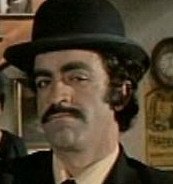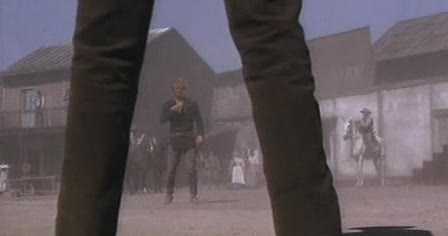
One Thousand Dollars on the Black (1000 dollari sul nero)

One Thousand Dollars on the Black (1000 dollari sul nero)

Movie · 1966 · 15 people

Alberto Cardone directed the 1966 Spaghetti Western One Thousand Dollars on the Black, an Italian and West German co-production filmed in Rome; its Italian title, 1000 dollari sul nero, means literally "1000 dollars on the black". The screenplay is by Ernesto Gastaldi, Vittorio Salerno and Rolf Olsen, and Mario Siciliano was executive producer. The film runs about 104 minutes and was released under different names in different countries: Blood at Sundown in English, Les Colts de la violence in France, Baño de sangre al salir del sol in Spain and Sartana in Germany, where it premiered on 28 July 1967.

Its main significance is that it presents the first screen appearance of the villainous Sartana, played by Gianni Garko. In later years Garko played the character again, as an antihero, in the Sartana film series, and this film is regarded as the series' inspiration. Even so, it is not counted as an official entry in the series.

Besides Garko, the cast includes Anthony Steffen, Erika Blanc, Sal Borgese, Carlo D'Angelo, Carla Calò, Sieghardt Rupp, Franco Fantasia, José Calvo, Angelika Ott and Chris Howland.

DirectorAlberto Cardone

Reactions

You can pick up to 3 reactions.

Cast

Names without a link have no profile here yet.
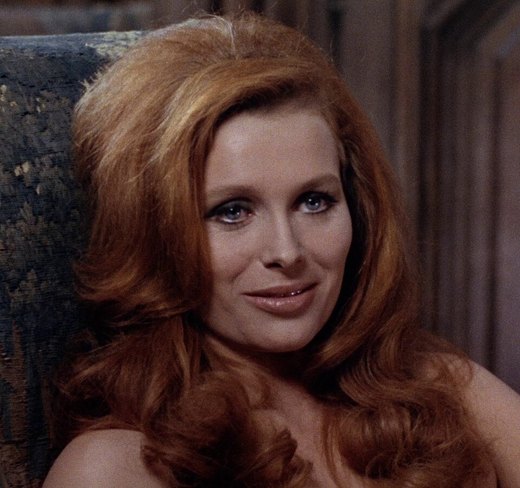
Erika Blanc Erika Blanc Actor · 84 years old Joselita/Joschita Rogers Sal Borgese Sal Borgese Actor · 89 years old Mexican in bar Anthony Steffen Gianni Garko Carla Calò Carlo D'Angelo Sieghardt Rupp Franco Fantasia Daniela Igliozzi Olga Solbelli Gianni Solaro José Calvo Angelika Ott Chris Howland Gino Marturano
Through different eyes

Action & Thriller Fan Puts pace, tension and set pieces first; little patience for slow drama.

A point of curiosity for spaghetti western fans: it's the film where Sartana first appears on screen, and here he's the villain, not the hero. For anyone after duels and showdowns, it delivers what the genre promises. But those looking for the antihero of the later Sartana films will find something different; in my view the story ends up living in the villain's shadow.

Cinephile Looks at script, editing and directing choices; keeps a distance from formula films.

The film's place in cinema history comes less from itself than from the character it gave birth to. Gianni Garko's Sartana is a villain here; that the same actor later played the character again as an antihero is an interesting shift that shows how easily the spaghetti western could erase the line between villain and hero. The script seems faithful to the genre's familiar patterns, which makes the film more an origin document than a work that stands out on its own. Though it isn't counted as part of the official series, genre fans who want to see where Sartana came from shouldn't skip it.

History & Society Lens Asks about the period, the social background and what the work reflects.

The film shows clearly how, by the mid-1960s, the spaghetti western had become an international industrial product. An Italian and West German co-production, an American West shot in Rome, and a single film circulating under a different name in each country. Its release in Germany simply as Sartana suggests producers repackaging the film to suit each market's expectations. It matters less for its story than for how it was made: a record of a time when Europe reproduced American myths in its own studios, with its own actors.

These are not reader reviews: they are short editorial takes written from different viewer perspectives with AI assistance. Reader reviews are below.

Reviews (0)

Log in Log in to write a review.

Comments