Halima's Path

Halima's Path

Movie · 2012 · 8 people

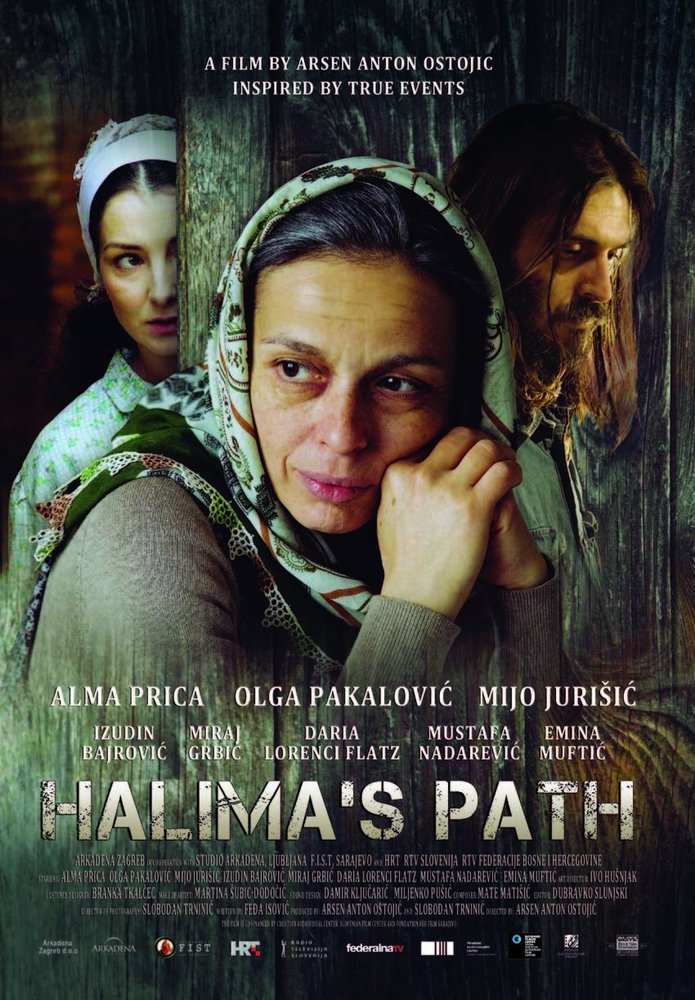
Bosnia, Croatia and Slovenia co-produced the 2012 drama Halima's Path (original title Halimin put). Croatian director Arsen Anton Ostojić spent four years on the film, a strong and emotional story inspired by real events; it runs about 97 minutes. It is said to have played at 50 festivals worldwide and won more than 30 awards, and it was chosen as Croatia's entry for Best Foreign Language Film at the 86th Academy Awards, though it was not nominated.

At its centre is Halima, a grieving but strong-willed Bosniak woman who must track down an estranged niece to recover the bones of her son, lost in the 1990s war in Bosnia. Miraj Grbić and Izudin Bajrović are in the cast, along with Mustafa Nadarević, Daria Lorenci and Slaven Knezović.

The story is drawn from the real lives of the Bosniak couple Zahida and Muharem Fazlić, who lived in a village near Prijedor. Their adopted son Emir was killed in the 1992 Korićani Cliffs massacre. It took more than twelve years to trace Emir's biological mother in Zagreb, and she refused to give DNA to identify him. In the end his sister, in Vitez, agreed to give blood. Zahida Fazlić died in May 2011. Feđa Isović wrote the screenplay.

DirectorArsen Anton Ostojić

Reactions

You can pick up to 3 reactions.

Cast

Names without a link have no profile here yet.

Through different eyes

History & Society Lens Asks about the period, the social background and what the work reflects.

The strength of Halima's Path lies in reducing the vast tragedy of the Bosnian war to a single mother's effort to recover her lost son's bones. The story comes from the real lives of Zahida and Muharem Fazlić, who lived near Prijedor; their adopted son Emir was killed in the 1992 Korićani Cliffs massacre. That even years after the war an identification still depends on blood ties, on DNA and on a relationship with estranged relatives that has to be rebuilt shows how the war lives on inside families. Adoption adds another layer: the difference between ties of blood and ties of love becomes a very concrete question here.

Cinephile Looks at script, editing and directing choices; keeps a distance from formula films.

Telling a war drama not through frontline scenes but through a family's search for a missing body is a smart choice. Arsen Anton Ostojić spending four years on the film, and its reported fifty festival screenings and more than thirty awards, show that the approach found a wide response, as does its selection as Croatia's Oscar entry. But films with important subjects carry a familiar risk: the weight of the subject can override the cinematic choices. In a story drawn from real grief every scene is already charged, so restraint matters most; inflating emotion with music or long mourning scenes risks wearing the audience out rather than making it think.

Family Viewer Asks whether the whole household can watch it; cares about humour and heart.

This is not a film to watch with children. It is about a mother searching for the bones of a young man killed in the war, and the grief and loss weigh heavily. With high-school-age teenagers it can be worthwhile, if you talk about the Bosnian war beforehand. Adults should know it will be a moving but draining evening.

These are not reader reviews: they are short editorial takes written from different viewer perspectives with AI assistance. Reader reviews are below.

Reviews (0)

Log in Log in to write a review.

Comments