Three Friends (Üç Arkadaş)

Three Friends (Üç Arkadaş) (translated)

Movie · 1958 · 5 people

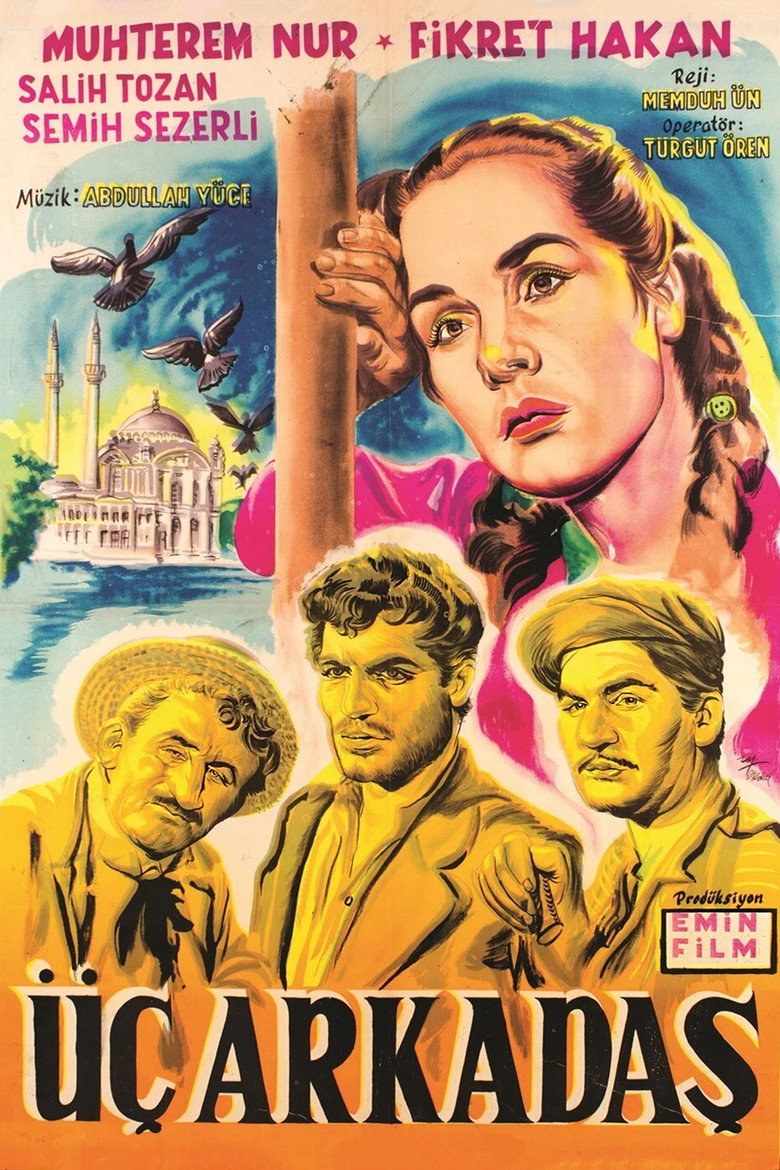
Üç Arkadaş is a Turkish drama and romance directed by Memduh Ün and released in Turkey in 1958. Ün adapted a story by Turgut Ören with co-writers Muammer Çubukçu, Metin Erksan, Ertem Göreç, Aydın Arakon and Atıf Yılmaz. It follows three poor friends who set out to bring happiness to a blind young woman they meet on the street.

Living in an abandoned old mansion, the three get by on street work: Monsieur Artin Dartanyan (Salih Tozan) is a photographer, Murat (Fikret Hakan) tells fortunes and Mıstık (Semih Sezerli) shines shoes. One night they come across Gül (Muhterem Nur), a homeless blind girl who sells safety pins, and take her back to the mansion. They tell her they are wealthy and can pay to have her sight restored. Murat falls in love with her, and the friends set out to raise the money for the operation.

Talat Emin produced the film for Emin Film; Ertem Göreç edited it and Abdullah Yüce composed the score. The film screened at the 16th International Istanbul Film Festival and was voted among the seven best Turkish films. Restored by Mimar Sinan University's film and television center, it was screened at the Atlas Cinema on April 5, 2011, with the director present. Memduh Ün remade the story in 1971.

DirectorMemduh Ün
ScreenwriterMuammer Çubukçu, Metin Erksan, Memduh Ün, Ertem Göreç, Aydın Arakon, Atıf Yılmaz
Production companyEmin Film

Reactions

You can pick up to 3 reactions.

Cast

Through different eyes

AI-assisted editorial takes written from different viewer perspectives. They are not reader reviews; those are below.

Yeşilçam Nostalgic A viewer raised on the classics, looking for warm storytelling and strong acting.

At the heart of this film is a kind lie: three men with nothing tell a blind girl they are rich, then do everything they can to keep that lie standing. That was always what I loved most about Yeşilçam. It told stories of poverty not to make you pity people but to show how generous they can be. A photographer, a fortune-teller and a shoeshine put one person's happiness ahead of their own troubles. Viewers used to today's cynical storytelling may find it naive; in my view, that innocence is the film's real worth.

Cinephile Looks at script, editing and directing choices; keeps a distance from formula films.

The writing credits are a document in themselves: alongside Memduh Ün, the script passed through the hands of Metin Erksan, Atıf Yılmaz, Ertem Göreç and Aydın Arakon, names that would soon shape the cinema of the period with their own films. With that many hands on one script, the first question to ask today is how the film holds a consistent tone. The engine of the story, meanwhile, is familiar: blindness, an expensive operation and the scramble for money are among melodrama's most worn devices. What decides whether the film lasts is not the formula itself but how much room it gives to the three friends' everyday street life. The restored print means that argument can rest on the images themselves rather than on guesswork.

History & Society Lens Asks about the period, the social background and what the work reflects.

The world the film builds opens a small window onto urban poverty in the 1950s. Taking photographs, telling fortunes, shining shoes, selling safety pins: all street work that is just enough to get through the day. The friends making their home in an abandoned old mansion matters too, as a building left over from a once-wealthy way of life becomes a shelter for people with no one. The film presents these conditions not as a critique but as the ground for solidarity, choosing to show how the poor look after one another rather than asking why they are poor. That choice makes for a warm story, but it softens the social picture somewhat.

Reviews (0)

Log in Log in to write a review.

Comments