Sorry to Bother You

Sorry to Bother You

Movie · 2018 · 15 people

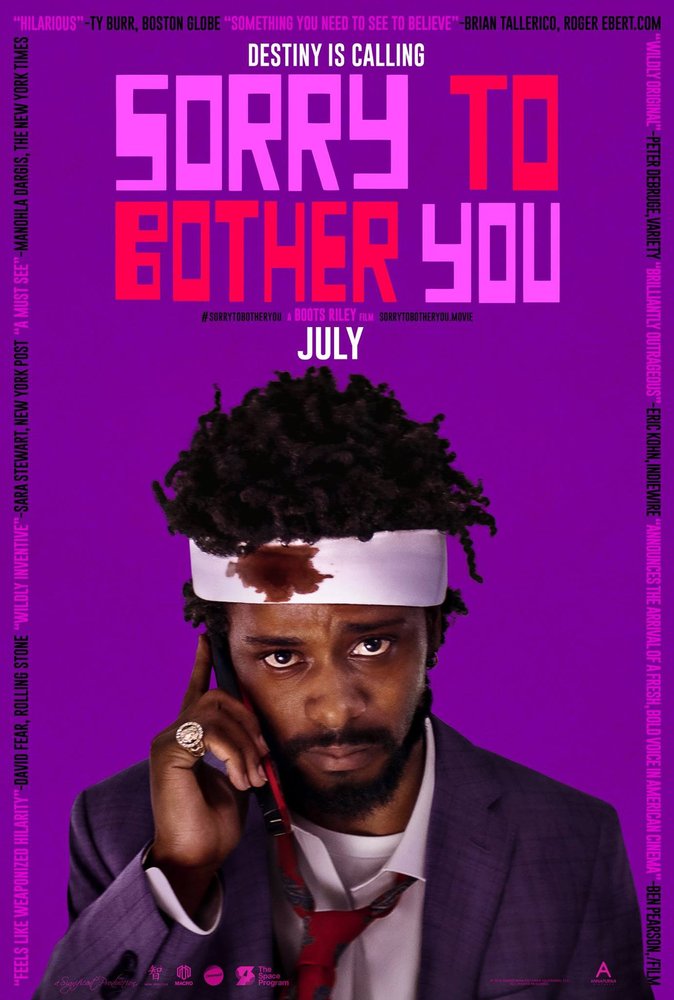
Musician Boots Riley made his feature directing debut with Sorry to Bother You, an absurdist American black comedy with a science fiction streak that he also wrote, released in 2018. It premiered at Sundance and then found commercial success in cinemas, with critics praising the screenplay, the direction, the cast and the soundtrack.

The story unfolds in an alternate version of Oakland, California. Cassius Green (Lakeith Stanfield) is a young African-American telemarketer who discovers that speaking in a "white voice" is the key to getting ahead at work. His unexpected success pulls him into a disturbing corporate conspiracy, and he must choose between chasing profit and joining his activist friends, who are trying to unionize. Tessa Thompson (as Detroit), Jermaine Fowler (as Salvador) and Omari Hardwick are among the leads, with Terry Crews, Patton Oswalt, David Cross, Danny Glover, Steven Yeun and Armie Hammer also in the cast.

Principal photography began in Oakland in June 2017. The film premiered at the Sundance Film Festival on 20 January 2018 and reached US cinemas through Annapurna Pictures on 6 July 2018, with Focus Features and Universal Pictures handling international distribution. It grossed $18.3 million against a budget of about $3.2 million.

DirectorBoots Riley
Production companyCinereach

Reactions

You can pick up to 3 reactions.

Cast

Names without a link have no profile here yet.

Steve Buscemi Steve Buscemi Film actor · 68 years old Danny Glover Danny Glover Actor · 80 years old Langston Rosario Dawson Forest Whitaker Kate Berlant Armie Hammer Steven Yeun Terry Crews Patton Oswalt Omari Hardwick Jermaine Fowler Lily James Tessa Thompson David Cross Lakeith Stanfield
Through different eyes

Cinephile Looks at script, editing and directing choices; keeps a distance from formula films.

Boots Riley's first feature stands out for its daring. Mixing absurdist black comedy with science fiction, it starts as a realistic workplace satire and drifts into ever stranger territory; that shift in tone is both the film's greatest strength and its riskiest move. The script is rich in ideas, but some of them are left before they are fully developed, and the leap in the final stretch may lose part of the audience. Even so, such a personal visual language and such a distinctive sense of humour are rare in a debut. It is no surprise that critics singled out the screenplay, the direction and the soundtrack.

History & Society Lens Asks about the period, the social background and what the work reflects.

The film's central idea, that success comes once you use a "white voice" on the phone, is a sharp observation about how race and class intertwine in working life. Cassius's choice lies between personal advancement and solidarity with friends trying to unionize, which turns the film less into an individual success story than an allegory of labour and exploitation. Setting it in an alternate Oakland bends reality a little so we can see it more clearly. One could say the message is sometimes delivered too directly, but few films look at contemporary working conditions from such a playful angle.

Family Viewer Asks whether the whole household can watch it; cares about humour and heart.

It may be billed as a comedy, but this is not a family film. The black humour dominates, and the story heads into a disturbing corporate conspiracy. Themes like race, exploitation and working life won't speak to children, and the strange science-fiction side could unsettle younger ones. It leaves plenty to talk about for teenagers and adults, but it isn't the kind of film to put on for everyone in the evening.

These are not reader reviews: they are short editorial takes written from different viewer perspectives with AI assistance. Reader reviews are below.

Reviews (0)

Log in Log in to write a review.

Comments