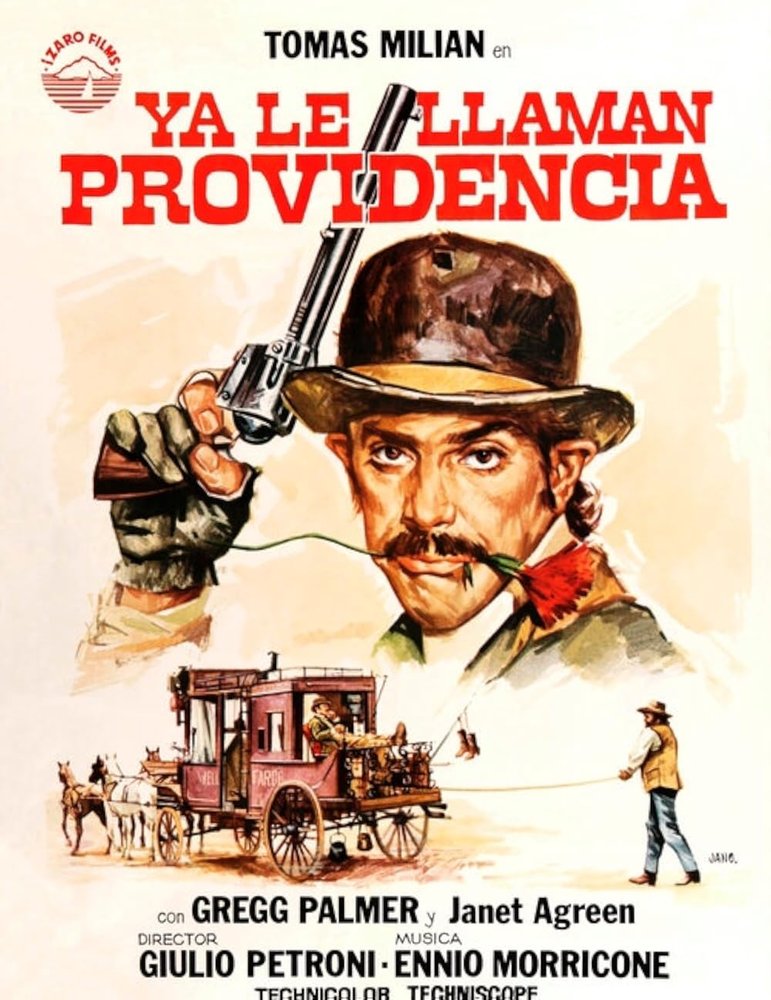
Life Is Tough (La vita, a volte, è molto dura, vero Provvidenza?)

Life Is Tough (La vita, a volte, è molto dura, vero Provvidenza?)

Movie · 1972 · 15 people

La vita a volte è molto dura, vero Provvidenza?, known internationally as Life Is Tough, Eh Providence?, is a 1972 Italian western comedy directed by Giulio Petroni. The film joins the spaghetti western tradition to humour, and its title means roughly "Life is sometimes very hard, isn't it, Providence?"; some sources also give it as Sometimes Life Is Hard - Right, Providence?. Running about 101 minutes, it was shot in Italian.

Tomás Milián takes the lead. The cast also includes Janet Ågren, Dieter Eppler, Maurice Poli, Paul Müller, Horst Janson, Gabriella Giorgelli and Giovanni Cianfriglia, along with Mike Bongiorno. The screenplay is the joint work of Franco Castellano, Giuseppe Moccia and Piero Regnoli. It is a co-production of France, Italy and West Germany, although some sources describe it as Italian-Spanish.

The film did well at the box office, and an immediate sequel followed, Ci risiamo, vero Provvidenza? ("Here we go again, eh Providence?"), directed by Alberto De Martino. First shown in German-speaking countries on 29 December 1972, the film circulated under different names, including Providenza! – Mausefalle für zwei schräge Vögel in Germany and On m'appelle Providence in France.

DirectorGiulio Petroni

Reactions

You can pick up to 3 reactions.

Cast

Names without a link have no profile here yet.

Gabriella Giorgelli Gabriella Giorgelli Actor · 85 years old Sister Giovanni Cianfriglia Giovanni Cianfriglia Actor · died at 89 The Challenger Tomás Milián Janet Ågren Dieter Eppler Maurice Poli Renzo Marignano Paul Müller Mike Bongiorno Carla Mancini Luigi Antonio Guerra Arnaldo Dell'Acqua Gregg Palmer Horst Janson Roberto Dell'Acqua
Through different eyes

Action & Thriller Fan Puts pace, tension and set pieces first; little patience for slow drama.

It is a spaghetti western, but there are as many jokes as guns, with Tomás Milián in the lead. If you want classic western tension, the humour may hit the brakes now and then, so go in expecting laughs more than shootouts. Still, the western atmosphere and a big cast are there. Doing well at the box office and getting a sequel right away shows the mix found its audience.

Cinephile Looks at script, editing and directing choices; keeps a distance from formula films.

The film marries the spaghetti western tradition to comedy and shares the usual problem of such hybrids: when suspense and gags jostle for space in the same scene, both can get watered down. A script by three writers and a production shared by three countries point to a business model closer to serial production than to a unified auteur film. I say that not to belittle it but to describe what it is; this was an entertainment industry working by its own rules. The sequel arriving straight after its box-office success confirms as much. An interesting specimen for anyone curious about the genre's history, though expecting a standalone masterpiece would be unfair.

History & Society Lens Asks about the period, the social background and what the work reflects.

An Italian western co-produced by France, Italy and West Germany is a small record of how European popular cinema worked in the early seventies. The myths of the American West are remade in Europe for European audiences, this time not with solemnity but with mockery. That mockery reflects a stage when a genre had started poking fun at its own conventions. The box-office success and the quick sequel suggest audiences were ready to laugh at hero stories as well. Interesting for anyone curious about how western mythology changed in Europe, though the film chooses to entertain rather than say anything deliberate on the subject.

These are not reader reviews: they are short editorial takes written from different viewer perspectives with AI assistance. Reader reviews are below.

Reviews (0)

Log in Log in to write a review.

Comments