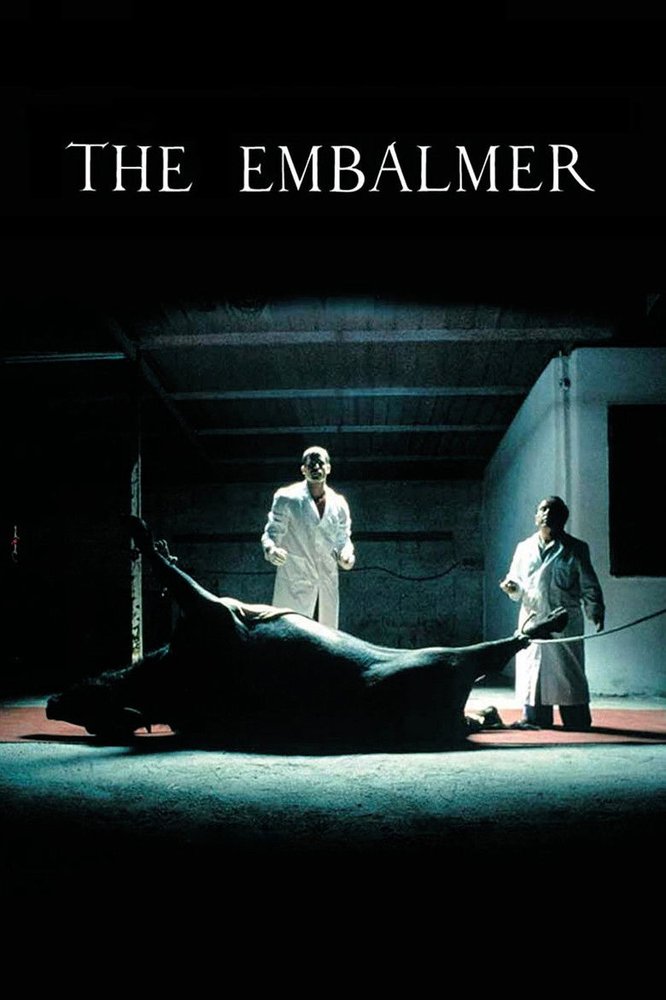
The Embalmer (L'imbalsamatore)

The Embalmer (L'imbalsamatore)

Movie · 2002 · 7 people

Inspired by a real incident reported in the Roman press in 1990, Matteo Garrone's 2002 neo-noir drama The Embalmer is called L'imbalsamatore in Italian and is also known as The Taxidermist. Garrone wrote it with Ugo Chiti and Massimo Gaudioso for the producers Fandango; the Italian production was shot in Italian and runs 101 minutes. The Italian ministry's film directorate recognised it as a work of national cultural interest.

Three people stand at the centre: the taxidermist Peppino (Ernesto Mahieux), the young Valerio (Valerio Foglia Manzillo) who comes to work with him, and Valerio's girlfriend Deborah (Elisabetta Rocchetti). Peppino takes Valerio under his wing, and the arrival of Deborah strains the arrangement. Foglia Manzillo, a former model, made his acting debut in the film. The cast also includes Lina Bernardi, Pietro Biondi, Bernardino Terracciano and Marcella Granito. Filming took place at Villaggio Coppola, a district of Castel Volturno in Campania, and in Cremona in Lombardy.

The film was selected for the Directors' Fortnight at the 2002 Cannes Film Festival under the title L'étrange monsieur Peppino. Mahieux won the David di Donatello for Best Supporting Actor for playing Peppino; the film also took the David di Donatello for Best Screenplay and two Nastro d'Argento awards, for best editing and best producer.

DirectorMatteo Garrone
Production companyFandango

Reactions

You can pick up to 3 reactions.

Cast

Names without a link have no profile here yet.

Ernesto Mahieux Ernesto Mahieux Actor · 80 years old Peppino Profeta Elisabetta Rocchetti Elisabetta Rocchetti Actor · 51 years old Deborah Valerio Foglia Manzillo Lina Bernardi Pietro Biondi Bernardino Terracciano Marcella Granito

Through different eyes

Cinephile Looks at script, editing and directing choices; keeps a distance from formula films.

The Embalmer is a film in which Matteo Garrone builds a tight three-person triangle in the dark language of neo-noir, drawing tension from relationships rather than events. Peppino taking Valerio under his wing and Deborah's arrival upsetting the balance is a simple setup on paper; the craft lies in turning that simplicity into an unsettling story of possessiveness. Ernesto Mahieux winning a David di Donatello as Peppino, together with the screenplay award, signals that the triangle is well built, while the Nastro d'Argento for editing says something about the film's rhythm. Still, viewers looking for the plot momentum of classic noir may not find it here; Garrone is in no hurry and puts atmosphere ahead of story.

Action & Thriller Fan Puts pace, tension and set pieces first; little patience for slow drama.

A quick warning for anyone who sees the neo-noir label and expects a thriller: this is not a chase movie. The tension builds slowly out of the friction between three people. In my view it is unsettling if you give it patience, but for someone after a fast pace it may feel too heavy. Being inspired by a real incident only adds to its creepiness.

History & Society Lens Asks about the period, the social background and what the work reflects.

Being inspired by a real incident reported in the Roman press in 1990 gives the story the chill of a news page. Instead of familiar Italian vistas, Garrone picks a district of Castel Volturno in Campania and Cremona in Lombardy, placing the story outside the postcard, in ordinary places. The real social question is the bond between the master and his young assistant: when do protection and a job turn into dependence and control? The strain Deborah's arrival puts on that bond shows how thin the line between affection and possessiveness can be. The film asks this without moralising, with a cool, observant eye.

These are not reader reviews: they are short editorial takes written from different viewer perspectives with AI assistance. Reader reviews are below.

Reviews (0)

Log in Log in to write a review.

Comments