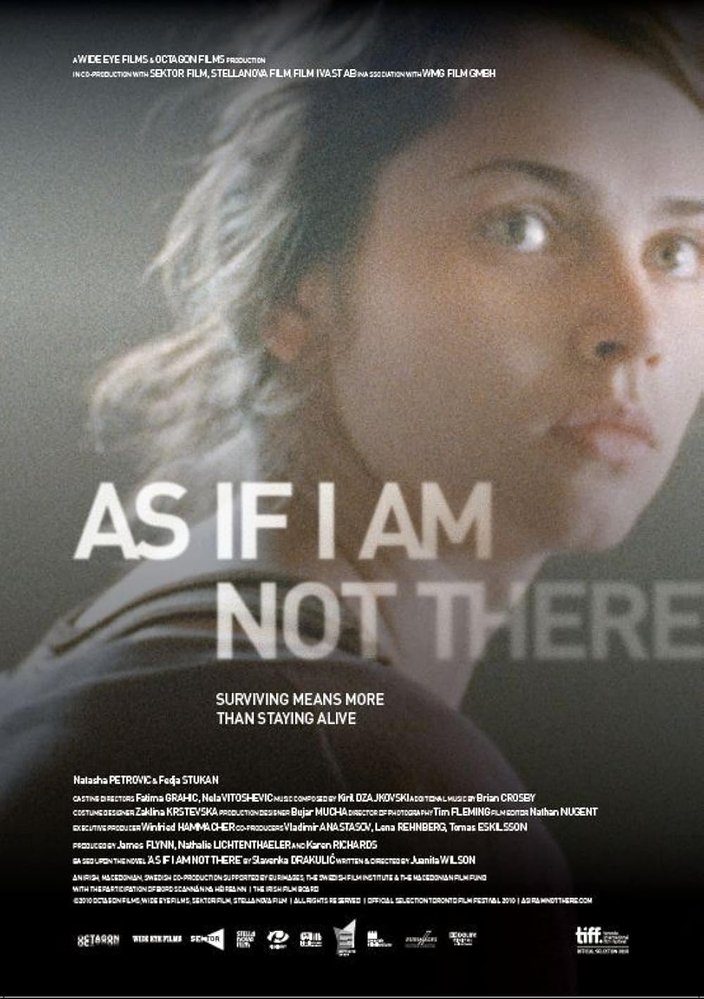
As If I Am Not There

As If I Am Not There

Movie · 2010 · 8 people

Ireland chose As If I Am Not There (Kao da me nema in the original Serbo-Croatian) as its entry for Best Foreign Language Film at the 84th Academy Awards, although it did not reach the final shortlist. Juanita Wilson directed this 2010 drama, Irish or, according to some sources, Irish-Serbian, from the Croatian writer Slavenka Drakulić's 1999 novel of the same name; set in the Balkans, the roughly 109-minute film was shot in Serbo-Croatian.

The story follows a young teacher who travels to a remote village. When the village is attacked, she is taken prisoner with the village's women and raped. The film deals with wartime rape during the 1992-1995 Bosnian War, and the novel's starting point is what happened to women held in the detention sites at Foča. The cast includes Stellan Skarsgård, Natasha Petrovic, Jelena Jovanova, Miraj Grbić, Jasna Diklić, Nikolina Kujača, Sanja Burić and Katina Ivanova.

The Foča events behind the novel were also taken to court: eight Bosnian Serbs were indicted, arrested and imprisoned. Drakulić's book appeared in French in 2002 as Je ne suis pas là.

DirectorJuanita Wilson

Reactions

You can pick up to 3 reactions.

Cast

Names without a link have no profile here yet.

Miraj Grbić Miraj Grbić Actor · 50 years old Commander Jasna Diklić Jasna Diklić Actor · 80 years old Caretaker Stellan Skarsgård Natasha Petrovic Jelena Jovanova Nikolina Kujača Sanja Burić Katina Ivanova
Through different eyes

Cinephile Looks at script, editing and directing choices; keeps a distance from formula films.

Wilson's film puts at its centre the responsibility of telling a story of wartime rape without sliding into exploitation, and takes its whole sense of measure from that responsibility. Tying the story to one woman's point of view is the right choice: events reach us not as a war panorama but from inside a consciousness. The feeling in the title, as if I were not there, is an idea well suited to becoming the camera's distance. Still, storytelling this inward risks weighing down the rhythm, and the film's silences will not suit everyone's patience. Shooting it in the local language is a respectable decision that reduces the danger of a foreign director looking at the subject from the outside.

History & Society Lens Asks about the period, the social background and what the work reflects.

The film deals with wartime rape against women during the 1992-1995 Bosnian War. The detention sites at Foča that inspired the novel were real; the events went to court, eight people were indicted and those responsible were imprisoned. That context brings the film closer to an act of remembrance than to fiction. Telling the story through a village teacher also matters: it shows how the war reached into the most ordinary institutions of civilian life, the school and the village. For anyone who wants to think about the subject alongside its historical and legal background, it is an important starting point.

Family Viewer Asks whether the whole household can watch it; cares about humour and heart.

This is definitely not one for a family evening. Its subject is the rape of women in wartime, a very heavy and shattering story. It is not something to watch with children, teenagers or grandparents. For adults, though, it is an important film because it is based on real events. If you decide to watch it, choose a time when you feel ready.

These are not reader reviews: they are short editorial takes written from different viewer perspectives with AI assistance. Reader reviews are below.

Reviews (0)

Log in Log in to write a review.

Comments