The Horse (At)

The Horse (At)

Movie · 1981 · 8 people

In the early 1980s Ali Özgentürk directed At (The Horse), a Turkish drama. The screenplay is by Işıl Özgentürk and the music by Okay Temiz; Asya Film produced it, and it was shot in colour on 35 mm. It shows the hard side of migration from village to Istanbul through a father and his son. Poverty, ignorance and street vending run through it, and the story has a political side.

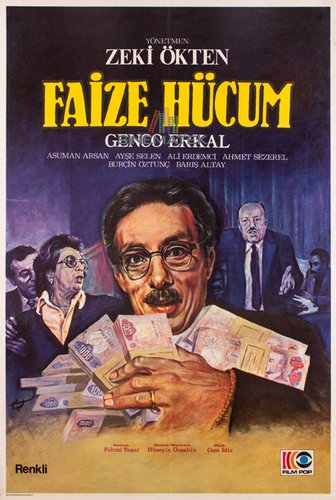
The father Hüseyin is played by Genco Erkal. To send his son Ferhat (Harun Yeşilyurt) to school, Hüseyin mortgages his village house and comes to Istanbul. He settles in an inn near Süleymaniye where mostly street vendors stay and, with help from his fellow villager Remzi (Yaman Okay), buys a three-wheeled cart and starts selling. Surviving in the city proves hard. Municipal inspectors keep after him, and when he tries market trading he finds others have already carved it up. He is crushed to learn that the state boarding school takes a child only if his father is dead. Güler Ökten plays the mad woman whose son has died and Macit Koper plays Selim.

Kenan Ormanlar was cinematographer and one of the producers, with Ali Özgentürk as the other. The title echoes the boy's dream of owning a horse.

DirectorAli Özgentürk
Production companyAsya Film

Reactions

You can pick up to 3 reactions.

Cast
Also in the cast: Zeki Alpan, Bilgesu Erenus

Through different eyes

History & Society Lens Asks about the period, the social background and what the work reflects.

At does not tell migration from village to city as a romantic success story. Hüseyin mortgaging his village house so his son can go to school shows what education means to poor families: a hope of climbing out of their class. The street vendors' inn near Süleymaniye, the municipal inspectors who never let up, the markets already carved up by others: the city's informal economy appears in all its harshness. Learning that a state boarding school will take a child only if his father is dead is the system's bitter irony. The film does not hide its political side, but its real strength lies in the daily struggle of a father and his son. A valuable testimony to Istanbul in the early 1980s.

Cinephile Looks at script, editing and directing choices; keeps a distance from formula films.

Ali Özgentürk stages Işıl Özgentürk's screenplay with an unshowy realism. Kenan Ormanlar's camera catches the crowds and poverty around Süleymaniye without prettifying them, and the 35 mm colour images have a texture that sits somewhere between documentary and fiction. Genco Erkal's Hüseyin is a weary, dignified performance free of exaggeration, and Okay Temiz's score brings a sound quite unlike the usual drama music. If there is a weakness, it is that the film sometimes states its thesis too openly: scenes that could rest on their own weight are pushed aside by the message. Even so, the metaphor built on the boy's dream of a horse gives the film a poetic axis and makes it a work that deserves to be considered alongside the socially engaged cinema of its time.

Family Viewer Asks whether the whole household can watch it; cares about humour and heart.

A heavy film, but an important one. A father risks everything to put his son through school and struggles badly in Istanbul. The real weight comes from poverty and helplessness. There is also a woman who has lost her mind after losing her son, which may upset young children. Best watched with middle- and high-school kids, with a talk afterwards. Too sad for the little ones.

These are not reader reviews: they are short editorial takes written from different viewer perspectives with AI assistance. Reader reviews are below.

Reviews (0)

Log in Log in to write a review.

Comments