Water Also Burns (Su da Yanar)

Water Also Burns (Su da Yanar)

Movie · 1987 · 5 people

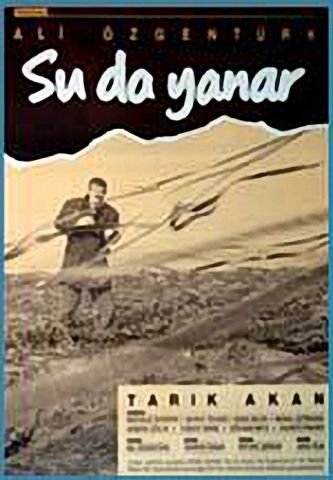
Ali Özgentürk directed Su da Yanar ("Water Also Burns"; German title Und Wasser brennt doch), a 1987 Turkish-German political drama. Işıl Özgentürk wrote the screenplay, Ali Özgentürk produced it and Asya Film made it; it runs 111 minutes. It turns the story of a director who wants to film Nâzım Hikmet's life into a story about censorship and prohibition.

It is set in an age when political divisions had burned many lives and people shut out anyone unlike them, under the pressure and fear that followed the September 12 coup. The idealistic director must find funding, but making a film about a name like Nâzım Hikmet is not easy then. The obstacles and the frightening climate, joined with confusion in his private life, darken his inner world. Tarık Akan plays the director, Şahika Tekand his wife and Natalie Douverne his foreign lover; Turgut Savaş is his father and Fahriye Pınarcı his grandmother. Meral Çetinkaya, Suna Selen and Hikmet Karagöz also appear.

Sarper Özsan wrote the music and Ertunç Şenkay shot it; Ali Özgentürk and Cevat Sezer edited. The film opened the Tokyo Film Festival, was banned shortly after release, and the ban was lifted after Özgentürk's acquittal, earning it the label of a film erased from Turkish cinema history.

DirectorAli Özgentürk
Production companyAsya Film

Reactions

You can pick up to 3 reactions.
Cast

Through different eyes

Cinephile Looks at script, editing and directing choices; keeps a distance from formula films.

Because it follows a director trying to make a film, Su da Yanar builds a self-reflexive structure: the idealistic hero hunting for money to film Nâzım Hikmet's life shows from the inside how censorship and fear seep into cinema. Ali Özgentürk tries to fuse the outer obstacles and the character's darkening inner world into one texture, and Tarık Akan carries that darkening with a convincing inwardness. But the private turmoil and the political theme are not always given equal weight, and at times the rhythm turns scattered. Even so, this 111-minute attempt is one of Turkish cinema's bold examples of a film about filmmaking itself.

History & Society Lens Asks about the period, the social background and what the work reflects.

The film conveys the climate of pressure and fear after the September 12 coup through how hard it is for an artist to bring a name like Nâzım Hikmet to the screen. It draws a society where political divisions burned lives and people shut out anyone unlike themselves. The film's own fate matches its story: after opening the Tokyo Film Festival, it was banned shortly after release, and the ban was lifted only when the director was acquitted. That is why Su da Yanar reads not just as a period film but as a record of how that period treated art.

Yeşilçam Nostalgic A viewer raised on the classics, looking for warm storytelling and strong acting.

Seeing Tarık Akan here as a director turning inward while his world grows darker gives one pause; the gravity of his performance is the film's firmest asset. Su da Yanar is not an easy watch; it has little cheer and much gloom. Someone looking for the heart-warming simplicity of the classics may at times feel worn down here. Still, in the stubbornness of a man who wants to tell a poet's life, it is impossible not to feel a deep love for a poet.

These are not reader reviews: they are short editorial takes written from different viewer perspectives with AI assistance. Reader reviews are below.

Reviews (0)

Log in Log in to write a review.

Comments